

Introduction: Why Investors Pay Attention to Insider Buying
When it comes to small caps and penny stocks, insider buying attracts outsized attention. These companies tend to receive less coverage from mainstream financial media and Wall Street analysts, so insider activity can stand out more than it would at a larger, more widely followed company. That is especially true in a market where headline-driven reactions can overwhelm business fundamentals.
That visibility often leads to a simple assumption: insiders know the business best, so if they are buying, the stock must be undervalued. Investors chase on news, seeming to validate the undervaluation.
Sometimes that is true, but not always. Are insider buys always bullish? No. Insider buying can be a useful signal, yet its meaning depends entirely on the context surrounding the purchase and the condition of the business itself.
The Short Answer: Are Insider Buys Always Bullish? No.
Insider buys are not always bullish in small caps. On their own, they do not form an investment thesis. At most, they serve as a signal that deserves further analysis.
To judge whether insider activity is meaningful, investors need to look beyond the headline. Who is buying? How much are they buying? Are multiple insiders involved? Is the business fundamentally sound? Is the stock trading at a valuation that makes the purchase more understandable? Without that context, insider buying alone says very little.
Why Insider Buys Can Be Bullish
There is a reason investors watch insider buying closely. Executives and directors usually have a better view of operating trends, capital needs, risks, and internal developments than outside shareholders do. When they commit personal capital in the open market, that can reflect genuine confidence in the company’s prospects.
That signal can carry added weight in small caps, where information is thinner and institutional coverage is weaker. In that setting, insider activity may offer a useful clue about management’s view of value.
Still, not all insider buys should be treated the same. Some are meaningful. Others are little more than noise.
What Makes an Insider Buy More Meaningful
The value of insider buying depends on the quality of the transaction, not just the fact that it occurred.
Open-Market Buys Matter More Than Option Awards or Automatic Transactions
The most meaningful insider purchases are voluntary open-market buys made with personal capital. Those transactions reflect an active decision to purchase shares at current market prices.
By contrast, option awards, automatic purchases, and other non-discretionary transactions are much less informative. They may increase an insider’s holdings, but they do not necessarily signal conviction.
Size Matters
A purchase also needs to be meaningful in size. That does not simply mean large in dollar terms. It means large relative to the insider’s compensation, existing ownership stake, and the company’s size.
A $20,000 purchase may be meaningful for one executive and almost irrelevant for another. The larger the commitment relative to the insider’s financial position and prior holdings, the stronger the potential signal.
Multiple Insiders Buying Is Stronger Than One Isolated Purchase
One insider buy can matter. However, when several insiders are buying around the same time, the signal tends to be stronger. Cluster buying suggests a broader level of internal confidence rather than one person’s isolated judgment.
That does not guarantee upside, but it generally deserves more attention than a single transaction viewed in isolation.
The Right Insider Matters
Who is buying matters almost as much as how much is being bought. Purchases by CEOs and CFOs often carry more weight than small buys from independent directors because top executives usually have deeper visibility into operations, capital allocation, and near-term business conditions.
Track record matters too. An insider who has a history of making timely and meaningful purchases is worth paying closer attention to than one with little or no prior buying activity.
Timing Matters
Timing can also shape the signal. Insider buying after a sharp decline may suggest that management sees value at lower prices.
But even that requires caution. A stock that has fallen sharply may be temporarily mispriced, or it may be deteriorating for legitimate reasons. Insider buying only becomes more constructive when the company’s fundamentals support the idea that the decline reflects a temporary setback rather than structural deterioration.
When Insider Buys Are Less Bullish Than They Look
Insider activity can appear positive on the surface while offering little real value once the broader picture is considered.
Symbolic or Very Small Purchases
Some insider buys are simply too small to mean much. If a purchase is modest relative to the insider’s wealth, compensation, or existing holdings, it may be more about optics than conviction.
That is why relative size matters more than raw dollar amount.
Troubled Companies Can Still Have Insider Buying
A weak company can still attract insider buying. Management may believe the stock is cheap, but cheap stocks can always get cheaper. Insider buying does not repair weak revenue, falling earnings, strained liquidity, or an overleveraged balance sheet.
If the business is deteriorating, the purchase may say more about management’s optimism than the company’s actual investment quality.
Averaging Down Is Not Always a Positive Signal
Insiders can be wrong. Turnarounds can take longer than expected. Financing conditions can worsen. Strategic plans can fail to play out. For that reason, insiders averaging down should not automatically be viewed as bullish.
It may reflect conviction, but it may also reflect misjudgment.
Buys That Occur Alongside Dilution, Weak Results, or Deteriorating Cash Flow
Insider buying becomes far less compelling when it occurs alongside worsening fundamentals. If the company is issuing shares, burning cash, posting weak results, or struggling to support operations, even a relatively large open-market purchase should be viewed carefully.
In those cases, insider activity may do little more than soften the optics around deeper problems.
The Bigger Question: What Is the Business Actually Doing?
This is the key question investors should keep in mind. In small caps, insider buying should confirm a developing thesis, not become or replace one.
Before treating insider activity as meaningful, investors should first determine whether the company is fundamentally sound and whether there is a credible value-creation opportunity in place.
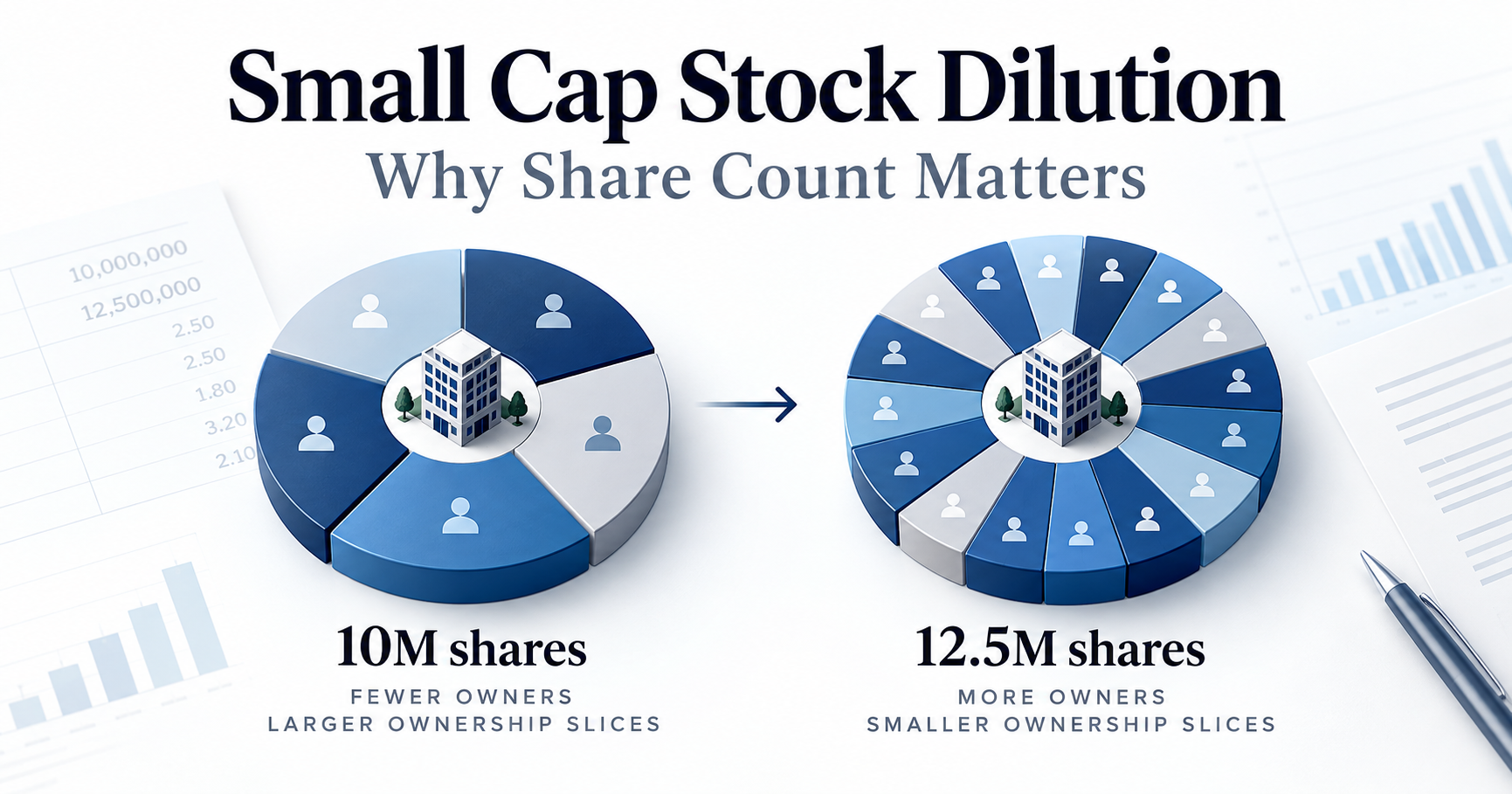
At a minimum, that means reviewing sales and earnings trends, balance sheet strength, debt burden, liquidity, cash flow needs, and valuation support. Dilution risk matters as well, especially for companies that may need outside capital to keep operating or fund growth.
Those factors should also be judged relative to peers. A stock is not attractive simply because an insider bought it. It becomes more interesting when insider activity aligns with a stronger underlying business and a valuation that offers support.
Insider activity can point you in a direction, but it should not replace a full investment process.
If you want to see how we evaluate business quality, balance sheet strength, valuation, and upside in stocks trading for $5 or less, start with Start Here.
A Better Way to Use Insider Buying
The most useful way to view insider buying is either as a screening tool or as a confidence booster.
As a Screening Tool
Insider activity can help narrow the universe of small caps into a more manageable list of companies worth investigating. That can be useful, particularly in an underfollowed part of the market where investors need ways to prioritize research.
But screening is all it is. The real work still lies in determining whether the business is healthy, the valuation is reasonable, and the purchase meaningfully supports a broader thesis.
As a Confidence Booster
Insider buying can also serve as a confidence booster when an investor already has a compelling fundamental case. In that setting, management’s willingness to buy shares can reinforce the view that the stock is undervalued or that a temporary setback has created opportunity.
That is very different from using insider activity as the sole reason to buy.
What Investors Should Avoid
Investors should avoid treating insider buying as a stand-alone buy signal, proof that downside is limited, or a substitute for balance sheet and valuation work.
Insider activity can be helpful. It should never do all the analytical heavy lifting on its own.
Signs Insider Buying May Actually Be Actionable
Insider buying tends to be more actionable when several favorable factors line up at once. Large open-market purchases, multiple insiders buying, activity after a temporary setback rather than structural deterioration, and purchases at companies with solid balance sheets and improving operating trends all make the signal stronger.
When insider activity also lines up with clear valuation support, the case becomes more compelling.
Signs to Be Careful Despite Insider Buying
There are also clear signs that investors should stay cautious despite insider purchases. Ongoing dilution, persistent losses without a credible path to improvement, heavy debt or refinancing risk, repeated small buys with no operational progress, and insider activity that conflicts with worsening fundamentals should all raise concern.
When several of those conditions are present, insider buying may be little more than a headline.
Conclusion
Are insider buys always bullish? No. They can be useful, but only when viewed in proper context. That is why insider activity should be treated as one piece of a structured investment process, not the entire investment case.
What matters is not just that an insider bought shares, but who bought, how much they bought, when they bought, and whether the purchase fits with the company’s sales trends, earnings profile, balance sheet strength, and valuation.
At their best, insider buys can strengthen an already promising story. At their worst, they can distract investors from a weak one. That is why insider activity should be treated as one piece of the puzzle, not the entire investment case.
Insider buying can be helpful, but it should never replace a disciplined process.
At The Bowser Report, we focus on the bigger picture: business model, financial strength, valuation, and long-term upside. Start Here to learn how the framework works.




Leave A Comment