

If you're like thousands of individuals, your money is sitting in a low yield savings account. However, this earns minimal returns that actually decrease your purchasing power over time as inflation expands. Others are happy to let someone else manage their money, which is better than nothing. However, paying annual fees eats into your potential returns.
Still, investing on your own is intimidating. Many don't even know where to start. So, in this beginner's guide, we'll walk you through the initial to start investing and watch your money grow.
Why start investing?
Before we detail how to get started, let's first explain why you should start investing. Investing is the best way to grow your hard-earned money, generating extra cash flow and increasing your wealth. Here are three of the top reasons to invest:
- Beat inflation: Inflation has been all over the news recently and for good reason: it's far higher than the Federal Reserve's target rate of 2%. The S&P 500's average annual return is somewhere around 8% (without dividends). This outpaces the Fed's target rate significantly, ensuring your spending power doesn't diminish over time.
- Build wealth: Taking a lesson for Morgan Housel's The Psychology of Money, wealth is what you don't see. Allowing your capital to grow in an investment account generates wealth. Over time, your returns will compound, growing you money exponentially.
- Generate cash flow: The average millionaire has seven streams of income, and your investment portfolio can be one. Through cash generating assets like dividend paying stock, you can supplement your regular earnings.

How to start investing?
Now that you know a handful of reasons why it's so important to start investing, let's learn just how to get started:
1. Opening a brokerage account to start investing
In order to start investing, you first need a brokerage account. This type of account allows you to buy and sell stocks, bonds and other financial instruments. Nowadays the process of opening an account is easier and faster than ever. However, there are many options, and you ou should pick a brokerage based on your personal needs. Things to consider are:
- Size of your account: Some brokerages are more suited to larger accounts while others better serve smaller portfolios.
- Value of customer service: If you're new to investing, excellent customer service can be a tremendous asset!
- Tech savviness: Depending on your comfort level with desktop apps, mobile apps and websites, certain brokers may be better suited to your needs.
Three reputable brokerages that have broad offerings to suit the needs of a variety of investors are (in alphabetical order)
2. Funding a brokerage account
Once you've successfully opened a brokerage account, you'll need to fund it. Instructions vary depending on the brokerage account that you selected. Choose an initial amount that you're comfortable with and take advantage of sign up bonuses (if offered). If you do not have a lump some of cash, many brokerages (including the three above) allow for regular deposits. This allows you to build up the cash in your account over time.

3. Developing your investment strategy
Before or after your account is funded, you'll need to decide on an investment strategy, which is the cornerstone of your investment journey. It's essential to write down your plan before you buying any stocks to keep your emotions in check. Consider the following when adopting or creating a plan:
- Size: Determine how much capital are you willing to invest.
- Time: Define your ideal holding period for investments as well as your time horizon for your entire portfolio.
- Allocation: Decide how much of your cash you are willing to put towards individual holdings.
- Risk: Establish the maximum loss you're willing to take on any given position.
- Stock type: Choose the type of companies are you interested in investing in.
- Entry point: Determine the criteria for opening a position in a stock.
- Exit point: Define when you will you sell a stock for a profit or a loss.
Writing this down will ensure that you adhere to it, minimizing the amount that your emotions become involved.
An example strategy is as follows:
- Size: $5,000
- Time: 1+ years on average
- Position Allocation and Risk: $250 per holding with a max loss of 50%
- Stock Type: Stocks under $3 at the time of investment, well-diversified across growth, value and industry
- Entry Points: Positions will be entered in support zones or along key moving average support on the weekly time frame
- Exit Strategy: Sell half of the original position when the share price doubles from the entry point; sell the remainder when the stock drops 25% from its most recent high after doubling (the Selling Plan of the Bowser Game Plan).
4. Finding stocks that fit your strategy
A key part of your strategy should be the types of stocks you'll invest in. Once that is defined, you can build a screener or consult research newsletters to find investment ideas (like The Bowser Report for small stocks). Consider factors like size (price per share or market capitalization), growth potential, value and industry. Whether you screen stocks on your own or subscribe to a newsletter, we always advise doing your own research after you've come across a stock. To do so, you'll want to check out some research platforms. There are a number of good free ones, including Finviz.com, Nasdaq.com and Yahoo! Finance.
5. Placing an order to start investing
Once you've developed your strategy and decided what stocks to invest in, it's time to place an order. Different brokerages have different interfaces, but the order types are consistent. They include:
- Market Orders: Buy or sell at the current market price
- Limit Orders: Buy or sell at a specific price
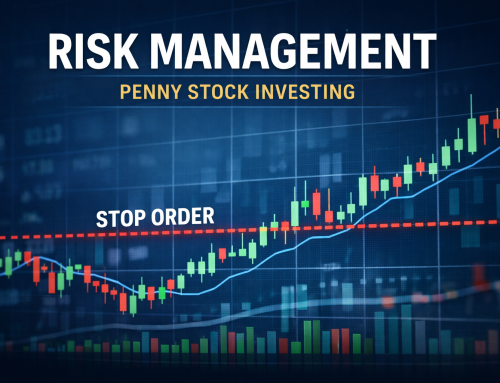
- Stop Orders: Trigger a buy or sell once a certain price is hit
You can also choose from different time frames, such as "Day" (canceled if not filled by the end of the day), "GTC" or "Good Till Cancelled" (keeps the order open until cancelled or until a specific date), "Ext" or "Extended Hours" (keeps the order open during after market/before market hours).
Select the appropriate order type for strategy and enter it for the stocks that you've research diligently to build your portfolio.
In conclusion, starting to invest may seem daunting at first, but with the right guidance and a well-defined strategy, you can take control of your financial future. Start investing today to begin your journey to financial freedom.




How can I know when to sell?
Larry – great question. The system that we’ve used since the inception of our newsletter is the Bowser Game Plan, which has a strict selling plan. Here is a link to the Game Plan’s description: https://thebowserreport.com/blog/the-bowser-game-plan/