

Introduction: Most Mistakes Happen Too Early
Investors in small caps often make mistakes before a position is ever taken. These mistakes take many forms, but most trace back to the absence of a repeatable, reliable system for filtering the universe of stocks into a manageable list of lower-risk candidates.
This process is not about “finding winners.” Instead, it is about reducing risk by eliminating stocks with a lower probability of successful value creation, based on a defined set of fundamental attributes and reviewing small-cap fundamentals each month.
A good strategy not only clarifies what you are focusing on, but—just as importantly—what you are not focusing on. This article outlines our process for saying no to the vast majority of stocks in the small-cap universe.
Why Narrowing the Universe Matters in Small Caps
Narrowing the universe of small-cap stocks is essential due to the structural risks inherent in the space, including:
- Limited coverage: small-cap stocks receive less analyst and institutional attention
- Liquidity constraints: many small-caps trade low daily volume
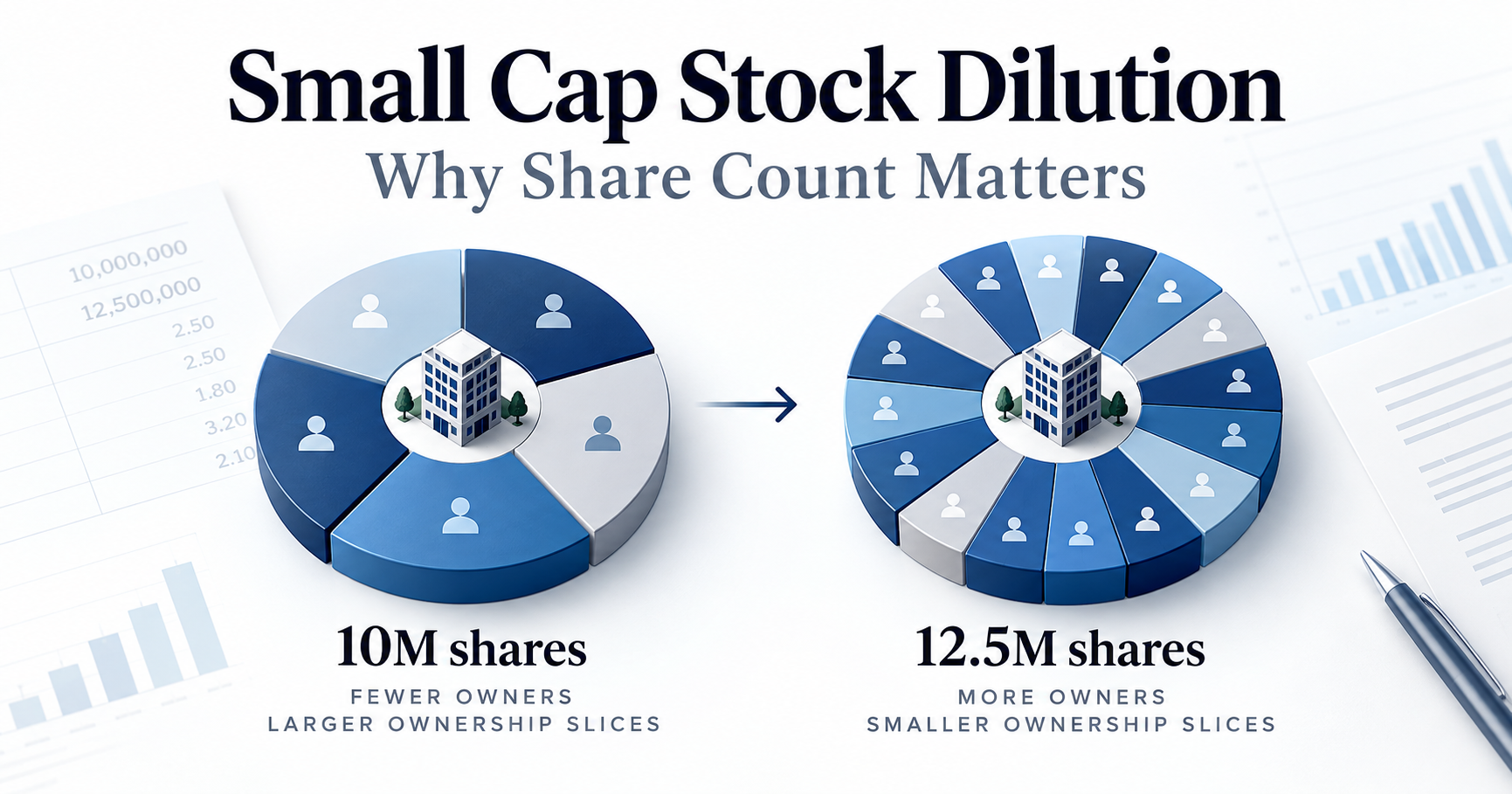
- Dilution risk: smaller businesses often rely on external capital to fund growth
- Financial fragility: thinner operating margins leave less room for error
Because of these risks and others, reducing the universe to companies with a higher probability of success is more important than selecting a single high-conviction idea.
After all, the goal of long-term small-cap investing is to increase the probability of success, not to guarantee it.
The Foundation: Rules Before Signals
As with any disciplined strategy, a sound foundation is paramount. The Bowser Rating System serves as the first gatekeeper—not a ranking tool.
By applying the same rules and asking the same questions of every stock, in every market environment, we determine which companies make the first pass and which do not.
Only after a company meets baseline criteria—earning at least eight of the following thirteen factors—do we explore deeper signals to further narrow the list:
- Business model
- Annual sales
- Quarterly sales growth
- Earnings trend
- Quarterly earnings growth
- Quarterly EBITDA growth
- Long-term debt
- Book value
- Current assets-to-liabilities ratio
- Shares outstanding
- Dividend (ability, not requirement)
- Distance from 52-week high
- Trading volume
At this stage, consistency matters more than precision.
See the Framework in Practice
We use this filtering process to narrow thousands of small-cap stocks into a disciplined watchlist focused on fundamentals and risk control.
Start with a free sample issue to see how the process works in real coverage.
The First Cut: Financial Viability
The first cut evaluates financial viability. At a minimum, we want to confirm that a company operates a legitimate business that generates demand.
This includes reviewing industry exposure, business model, and income statement data. If a business model resonates with customers, it will generate revenue. If it has operational scale, those revenues should translate into profits over time.
Many companies fail even this basic screen. These are often concept-stage businesses with no revenue or companies unable to scale profitably. These stocks are removed from consideration.
The Second Cut: Balance Sheet Integrity
Next, we assess how effectively the business model translates into balance sheet strength.
Leverage is a primary consideration. Understanding how much of a company’s operation depends on debt is critical. Generally speaking, lower leverage reduces risk.
Liquidity is equally important. We evaluate how a company’s assets compare to its liabilities—both short-term and long-term. Strong balance sheets tend to feature higher current assets, particularly cash, and fewer long-term obligations.
Companies that fail to meet basic balance sheet standards introduce unnecessary risk and are eliminated.
The Third Cut: Earnings and Cash Flow Direction
With a viable business model and acceptable balance sheet in place, we then examine earnings and cash flow trends.
Consistency is key. We are less concerned with absolute levels and more focused on direction and durability over time. Stable, improving trends indicate resilience and improve confidence in the underlying business.
What This Process Intentionally Ignores
After applying these filters, it is important to clarify what we do not emphasize in our analysis:
- Price momentum
- Headlines
- Short-term catalysts
- Market narratives
One of the easiest ways to make a reactionary decision is to treat a press release as more meaningful than it actually is.
In long-term small-cap investing, the focus remains on the underlying business and its capacity to generate future value. Stories and short-term catalysts tend to distract from that objective.
Where Signals Enter the Process (Later)
Once the universe is narrowed, we can evaluate higher-quality signals that help identify the strongest probability setups.
Based on recent market conditions, the most informative signals have been:
- Margin expansion
- Insider buying
- Balance sheet flexibility
When multiple signals align on top of a strong foundation, higher-probability setups begin to emerge.
What This Accomplishes for Investors
By eliminating companies that introduce structural and financial risk early in the process, investors are left with a smaller, more manageable universe.
Because each remaining stock meets consistent criteria, decisions become fewer and less emotional. Monitoring also becomes clearer, improving discipline and increasing the probability of long-term success.
Investors making more confident, less emotional decisions are able to realize when a company is making progress against its thesis and stay in those positions even when the market isn't reflecting that progress, like was the case with Electro-Sensors (ELSE) prior to its acquisition announcement.
Conclusion: Process Before Opportunity
Long-term success in small-cap investing starts with discipline at the beginning of the process.
Narrowing the universe is not about being right—it is about reducing unnecessary risk and improving the odds. Over time, risk mitigation is what enables sustainable returns.
Build a Rules-Based Small-Cap Plan
The Bowser Report delivers a monthly PDF issue plus weekly updates and watchlist guidance—designed to help investors manage risk without reacting to headlines.



Leave A Comment